Researcher without limits
- Written by Lourdes Pichs Rodríguez
- Published in Health
- Hits: 81
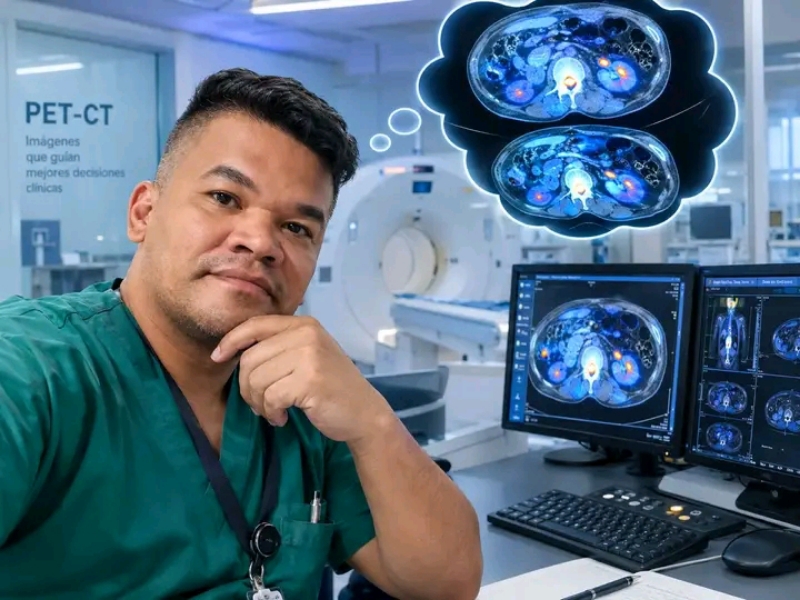 The doctor has published over 50 articles and contributed to two books on his specialty. Photos: Courtesy of the interviewee
He was the first to earn a Doctorate in Imaging Sciences in the province and became a Full Professor of this specialty in the territory in 2023. Now 37 years old, he is also a specialist in Comprehensive General Medicine (first and second degree), holds a Master's degree in Virtual Education, and is a member of the World Council of Academics. These achievements have been realized from his workplace, the Lucía Íñiguez Landín Clinical-Surgical Hospital in Holguín.
Some careers are built on momentous events. Others develop almost silently, through hours of study, patients, research, classrooms, and a constant desire to learn. José Cabrales Fuentes' career perhaps belongs to this second approach to the profession.
This week, the young doctor received his Medical Recertification in Radiology and Diagnostic Imaging, "a periodic process by which peers evaluate and revalidate the specialist's training, continuing education, and professional practice, granting accreditation for five years."
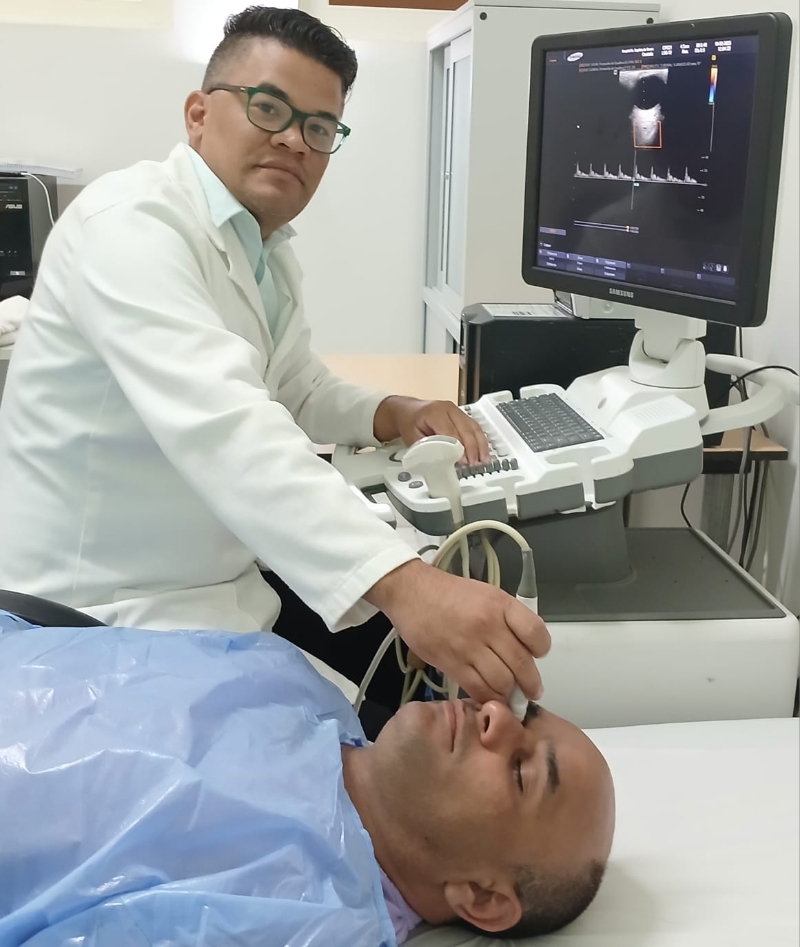
“I gratefully accept this new recertification, endorsed by the Integrated Radiology System for Ibero-American Certification and Accreditation (SIRCAI-CIR), which confirms the continuity of my practice as a specialist and my inclusion among the professionals recognized as Specialists of Excellence in Ibero-America. This recognition, rather than closing a chapter, renews my commitment to continue studying, growing, and contributing to Radiology,” he wrote on his Facebook profile.
The good news shared by the young researcher could not go unnoticed, and it prompted this conversation from afar, as the doctor will be in Portugal until November, specifically at the University Hospital of Coimbra.
It was not at all difficult to learn details about his work and aspirations, for he is as adept at communication as he is at research. Kindness is another of his gifts, and he readily agreed to answer every question.
First came his training and specialization; then his research and the recognition he received from a young age; then his status as the first Doctor of Imaging Sciences and the first Full Professor of the specialty in Holguín; later, the radiological symbol associated with his name; in 2025, his DIAR certification from Ibero-American peers; in 2026, his recertification; and, concurrently, a new international training phase in Coimbra, a period of high and growing academic responsibility.
"It all began in Holguín. I was born in the province, in the municipality of Urbano Noris, a place that is an essential part of my roots and of the person I am today. I studied Medicine at the University of Medical Sciences (UCMHo), where I have also developed a significant part of my professional and academic career."
While still very young, his scientific work began to bear fruit: he was recognized as Cuba's Best Young Researcher in the field of Medicine in 2022, and before the age of 35, he received multiple awards from the Ministry of Science, Technology and Environment (CITMA) related to his scientific activity and presence in international settings, as a collaborator with Cuban medical brigades in Venezuela and Cape Verde. However, more than a collection of distinctions, that period defined a way of understanding Imaging as a specialty in which attending, researching, and teaching could be part of the same path.
He affirms that over time, in that pursuit, he found a particularly symbolic expression. "For many radiologists, there is a dream that goes beyond publishing an article: to have one's own observation become recognized knowledge within the specialty."
In his particular case, that moment arrived with the "Investigation of the Cabrales Transmural Streak," a radiological sign that bears his name and represents the transformation of an observation born in clinical practice into a scientific contribution with implications beyond the local sphere.
In 2025, he obtained the Ibero-American Diploma in Radiology (DIAR), a certification of excellence in the specialty obtained through peer evaluation in Ibero-America.
The DIAR is awarded within the framework of the Integrated Radiology System for Ibero-American Certification and Accreditation (SIRCAI), an organ of the Inter-American College of Radiology (CIR). SIRCAI itself states that these processes seek to evaluate and certify the professional training of Ibero-American radiologists and that the DIAR constitutes a certification of excellence in the specialty.
“That diploma, valid for five years, didn't mark the end of one chapter. Rather, it marked the beginning of another, because certifying professional training at a specific time is one thing; keeping it updated over time is another,” he explains.
Precisely this continuity is what gives meaning to the recertification obtained now, in 2026, again within SIRCAI, as recognition of a professional career that has continued to develop after that initial certification. The system considers recertification a periodic process aimed at accrediting updated knowledge and skills through continuing education, research, publications, and teaching.
Between these two moments, the 2025 DIAR and the 2026 recertification, there is, therefore, much more than a date on a diploma. “There are years of clinical practice, research, publications, training of specialists, and academic work. The new certification can thus be understood as confirmation of continuity: the career that was evaluated in 2025 and continued to grow. Today it is recognized once again.”
He understands that while that stage was consolidating, a new opportunity arose to start anew from the learning process. Among numerous applicants, Cabrales Fuentes was selected for an ELAR scholarship in Radiology, which takes him to Coimbra, Portugal, to complete a subspecialty residency and continue his training in areas such as computed tomography, magnetic resonance imaging of the chest and abdomen, and interventional radiology.
Currently, Cabrales directs the Master's Program in Medical Imaging Diagnosis, a postgraduate training program that occupies a unique space within the country, and serves as the academic coordinator for the Imaging specialty in the province of Holguín.
"The knowledge I acquired over the years thus ceases to belong solely to my own career and becomes part of the training of new generations," he affirms.
For all these reasons, there is no doubt that his career path, in which each achievement has presented a new challenge, has been and will continue to be: to research after receiving recognition; to teach after learning and studying again; and subsequently, to obtain certification.
Perhaps that is why the 2026 recertification has a meaning that goes beyond the diploma. It doesn't represent the end of the road, but rather confirmation that the journey continues. When excellence depends on peer review, it can be expressed in a certificate. But when it is maintained over the years, in research, teaching, medical practice, and the willingness to keep learning, it begins to transform into something different.
But this young scientist's life hasn't been all about studying, researching, and teaching. Although much of his life has been spent in hospitals, classrooms, research projects, and other endeavors, there's something that gives meaning to everything else: "I have a beautiful family with my wife (Susana) and my son (Alain), and we're currently eagerly awaiting the arrival of our daughter (Alma). This personal dimension also reminds me that behind every project, every patient, and every academic effort lies something essential: working toward a better future for new generations."
There's no doubt that Cabrales's academic rigor will continue to flourish for the benefit of patients and the training of new specialists.
