Cuba: "The blockade suffocates and kills silently"
- Written by Redacción ¡ahora!
- Published in Cuba
- Hits: 495
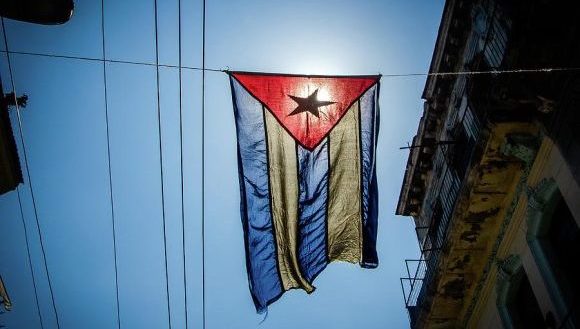 Speech by the Minister of Foreign Affairs of Cuba, Bruno Rodríguez Parrilla, in the United Nations General Assembly Debate under item 38, "Necessity of ending the economic, commercial and financial blockade imposed by the United States against Cuba".0
Mr. President, Your Excellencies, Permanent Representatives, Distinguished Delegates:
Against Cuba, the United States government is waging a multidimensional, unconventional war that has lasted for almost seven decades and has become more brutal and ruthless in the last seven months.
Now, the energy blockade, equivalent to a naval blockade, has been added, which is an act of war. Access to fuel supplies to Cuba, both commercial and humanitarian, is being prevented through direct threats, unilateral coercive actions, and even the harassment or intimidation of tankers by U.S. naval forces.
There have been repeated threats of military aggression from the highest levels of the U.S. government, and public sources describe war options and preparations.
In addition to the economic, commercial, and financial blockade, unprecedented and extremely extraterritorial actions are being taken, such as the use of secondary sanctions that follow the macabre plan to provoke a humanitarian crisis in Cuba and the total destabilization of the country, paving the way for or forcing a presidential order for an imperialist military intervention that would cause a bloodbath and countless losses of Cuban and American lives.
When asked if economic pressure against Cuba would continue to intensify, President Donald Trump himself responded, and I quote: "I don't think much more pressure can be exerted, short of going in and wrecking the place."
In recent months, the humanitarian damage inflicted on our population has multiplied, with the deterioration of the quality of life, the reduction of livelihoods, the limitation of opportunities for personal, family, and social development, and the massive, flagrant, and systematic violation of the human rights of an entire people in an act of collective punishment.
These are all matters of high importance and urgency that deserve not only the attention but also the clearest pronouncement from the United Nations and its most universal and representative body, the General Assembly, by virtue of its mandate to preserve international peace and security and to ensure the enjoyment of human rights.
Cuban families, especially children and young people, and mothers, feel the suffering of prolonged and unbearable blackouts or power outages. Often, when there is no electricity, there is also no drinking water. They know the anguish of not having medicine for a sick person. They are burdened by food shortages or the high prices of basic necessities.
The infant mortality rate of 4.0 per thousand live births has increased to 9.9. This means the preventable death in other conditions, with the availability of suitable equipment, devices and treatments, of 1,780 newborns.
The number of people dying from cancer in the country has increased significantly. In the case of children and young people, survival fell from 85% to 65%. The trend coincides with the hardest moments of the US siege.
The blockage suffocates and kills silently. Addressing this ruthless crime is also a responsibility of the United Nations.
The United States government, and especially its State Department, spreads the lie that the blockade is not directed against the Cuban people, but only against the government. Ask the Cuban people if they suffer from the blockade or not. Ask even the diplomats, correspondents, and other foreigners who live in Cuba.
We have heard, in an abuse of procedure, the shameless intervention of the United States delegate. He has not addressed any of the issues I have mentioned.
This is not surprising, because he represents the government responsible for the nuclear bombings of Hiroshima and Nagasaki, the government responsible for dozens of military interventions, and the government that has supported the most brutal military dictatorships in Latin America and other regions.
This is the government complicit in the genocide taking place in Gaza, in the repression of professors and students protesting at universities. It is the government responsible for the militarization of cities for political ends, the brutal repression of immigrants, the police hunt for them, and the separation of young children.
This is not surprising, because the delegate represents the government responsible for dozens of extrajudicial killings in the Pacific, Atlantic, and Caribbean Oceans, under the pretext of combating unproven international crimes.
These are the authorities responsible for police brutality against protesters in this country and for the significant increase in deaths in custody.
It represents the government responsible for the existence of a racially segregated system that brutally discriminates against minorities, particularly African Americans and Hispanics, within the largest prison population on the planet, and within a criminal justice and prison system based on racial segregation.
It also represents the government that pays women less for the same work.
I was surprised by the violation of this Assembly's rules of procedure and by having to listen to that speech before the Assembly had agreed to hold a debate.
I don't know if we will hear another speech from the United States, which, interestingly, was the first country to sign up to speak, even though it has just objected to this debate taking place.
The cynicism of the US delegation in this chamber is fundamental. They delivered a substantive intervention filled with tired lies in an attempt to censor the Assembly's right to debate precisely these issues.
Whoever abused the rules of procedure to make substantive, albeit slanderous, accusations minutes before or even during the debate was using this as justification for preventing it from taking place.
They were trying to infringe upon the General Assembly's right to address this very topic. They were attempting to exercise an act of censorship, which might be possible in a Green Beret camp, but not in this grand chamber.
I don't know if we will hear again in this session the worn-out argument of the U.S. government, according to which the fuel embargo against Cuba doesn't exist, that the blockade is merely a justification by the Cuban government for its problems, that the United States is only exercising its right to refuse to trade with Cuba and to apply a simple bilateral embargo.
It is a fallacy that does not withstand the slightest scrutiny, that contradicts the actions of the U.S. government with respect to Cuba and with respect to all the states you represent. It is a lie that no one believes, except for the delegate who spoke, who has even a modicum of information or decency, which he likely lacks.
The damages of the blockade—and I will give new figures—the damages of the blockade in the period between March 1st, 2025, and February 28th, 2026, at current prices, amount to a record $8.083 billion, 7% higher than the previous year. The cumulative impact since its inception reaches $178.7 billion at current prices.
Of course, these figures do not include the extreme impact of the total blockade of fuel supplies to Cuba, which began in February.
These impacts are fundamentally the result of extraterritorial coercive actions that violate the norms of international law, international trade, and freedom of navigation, as well as infringing upon the sovereign prerogatives of independent states, which you represent, in your right to engage with Cuba according to your own interests and laws.
In addition to the brutal energy blockade, other measures have been imposed throughout the year with the same objective: to force sovereign governments to comply with the illegitimate prohibitions imposed by the United States on trade with Cuba.
The United States government is forcing sovereign states, citizens, and businesses to sever their ties with Cuba, not out of self-interest, not due to commercial disadvantages, not even by mandate of their own governments, but at the behest of a foreign regime—in this case, the United States—which supposedly has no jurisdiction or authority over the activities of its citizens and businesses outside its borders.
Cuba, as a free, independent, and sovereign state, rejects the attempt to dictate from another country the form of government, the economic model, and the foreign relations that our nation must adopt.
Probably, if the United States delegation decides to repeat its intervention, we will hear the mendacious arguments that the United States government usually presents and that the delegate has already shared with us to justify the crime of genocide.
He would cite as supposed evidence figures on selective, highly regulated U.S. exports to Cuba, which depend on licenses or permits from the U.S. government, in violation of universally accepted rules of trade and freedom of navigation, and are now almost exclusively limited to the private sector, which is also restricted in its economic ties with U.S. counterparts.
These exports do nothing to help resolve the main problems that cause shortages and suffering for our people. They do not contribute, because the U.S. government does not allow it, to restoring our capacity for electricity generation or the supply of drinking water.
The United States government does not allow exports that contribute to the development of public transportation, ensure hospital services, benefit education, or even protect food supplies for the most vulnerable sectors of the population.
The delegate failed to mention that the United States government made an offer of humanitarian aid, which was immediately accepted weeks ago by the Cuban government, and that this aid has been delayed and restricted for political reasons.
Nor did he allude to the fact that the United States delegation to the World Food Programme was isolated in a vote in its attempt to block a $116 million food aid program for Cuba.
The U.S. delegation repeatedly claims, as a justification, that the Cuban government is supposedly incapable.
Anyone present here might reasonably ask, how can the problems mentioned by the distinguished delegate from the United States be attributed to the government of a country subjected to a genocidal blockade by its own government, a country that has endured this economic aggression for nearly 70 years and, despite its hardship, has developed a vast social and human development program?
How can the Cuban government be blamed for the consequences of the total deprivation of fuel and other essential supplies implemented over the past seven months? How can it not be acknowledged that, despite this, Cuba maintains stability, there is no large-scale humanitarian crisis, and the defense of our people has not wavered and will not waver?
We are comforted and encouraged by the collective solidarity, the participation and efforts of everyone, particularly women and young people in the communities, in the search for solutions, and by the intense and tireless work of the Party, the State, the Government, the local organs of People's Power, and the delegates of the people and civil society organizations.
The sovereign, truly sovereign, recent, and profound economic and social transformations adopted by our National Assembly to adapt the Cuban socialist model to today's harsh realities, including the brutal and escalating aggression of the United States, inspire hope in our people.
We are grateful for the broad international support and cooperation of numerous governments, parliaments, political forces, organizations, solidarity movements, and associations of Cubans residing abroad.
The hostility and threats that Cuba faces today are part of a worrying sequence of violations of international law and are a prelude to what could happen to any other country tomorrow.
We must ask ourselves in this Assembly whether this is the new world order toward which we are heading. We must consider whether this supposed order would be consistent with the principles and purpose of this organization, whether this is the path that will safeguard international peace and security, promote understanding among equally sovereign states, and foster cooperation, trade, development, and respect for human rights.
It is essential to prevent this behavior of domination, plunder, occupation, dispossession, and cognitive warfare from becoming integrated into an international order even worse than that of recent decades.
It is imperative to defend the founding values of the United Nations, international law, and the Charter of the United Nations, and to uphold the promise to save present and future generations from the scourge of war.
There are bilateral diplomatic talks proposed by the United States government, which Cuba accepted, in accordance with its tradition and foreign policy principles, with the sincere and constructive aim of finding solutions to bilateral differences.
However, these talks show no progress, and it is unlikely they will if those leading the talks in Washington expect to treat Cuba as a defeated or conquered adversary, as a colonial possession, or as a dominion over which the United States has jurisdiction and authority.
The data confirms that this aggressive behavior does not represent the interests of the majority of U.S. citizens. According to a study completed yesterday, 98.3% of posts and comments on social media in the United States do not support the energy embargo, the blockade, or any aggression against Cuba.
This genocidal and criminal policy stems from the anti-Cuban and vindictive whims of a tiny but powerful and influential segment, concentrated primarily in South Florida, which has demonstrated the capacity to manipulate the U.S. political system and influence the current administration's actions.
I don't know if the U.S. delegation will repeat in the next few minutes the ridiculous argument that Cuba represents a threat to the national security of the world's greatest military and nuclear power—aggressive, predatory, and intent on imposing peace through force.
There is no statement from the Cuban government, no evidence, not even the slightest indication that Cuba has intended to threaten the United States. No activity can be identified in Cuba that jeopardizes the national security, the well-being of its citizens, or the competitiveness of the economy of that powerful neighbor.
Cuba is not a threat. The embargo is. The threatened nation is Cuba.
But we are a committed nation and defender of peace, international law, multilateralism, truth and justice.
A people that has been fighting for its freedom and independence for more than 150 years and that has written pages of glory standing up to resist all attacks, will defend its independence and sovereignty at all costs.
In the year of the centenary of the historical leader of the Cuban Revolution, Commander in Chief Fidel Castro Ruz, faithful to his legacy, the decision of the Cuban people will always be:
Homeland or Death. We shall overcome.
