U.S. presence in the Caribbean: Let's be clear
- Written by Francisco Delgado Rodríguez
- Published in Cuba
- Hits: 1271
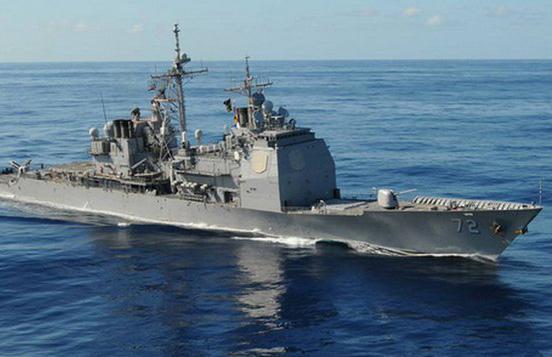 Several theories have been put forward regarding the U.S. military threat in the Caribbean, suggesting that its real objective would be to end the Cuban Revolution.
Following an old pattern of outdated messages and assertions, in the context of threats of aggression against the noble Venezuelan people, the historical hypothesis that if a country allied or friendly to Cuba suffers some kind of crisis, invasion, or collapse, a supposed cascade effect would more or less automatically occur, dragging with it the existence of the Cuban Revolution, has once again been the subject of evaluation and consideration.
The spokesperson for the occasion has been the London-based newspaper The Daily Telegraph, with its traditionally conservative stance, sometimes recalcitrantly right-wing and, incidentally, aligned with the worst causes promoted by the U.S. government.
In an article entitled "Why is Cuba the real target of Trump's campaign in Venezuela?", signed by David Blair, it is stated that the real purpose of the aggression against that country is to go against the Cuban Revolution, let's say, that is the ultimate goal. Blair, incidentally, is dedicated to writing about international affairs, with an emphasis on Africa, including the Middle East, but now he has taken a sudden interest in the island.
But of course, nothing is for pleasure or coincidental in the editorial policies of this type of media, with significant reach, in this case, in the United Kingdom and Europe.
What is new about Blair's work is that, until now, in the current situation of air and naval deployment, threats, and aggressive rhetoric against Venezuela, with abundant media coverage, no effort had been made to link it to Cuba, beyond the counterrevolutionary media ecosystem.
As we know, this is nothing new in this hostile milieu that operates mainly in South Florida, where the most delusional proposals to overthrow the Cuban government tend to thrive, an issue on which Cuban-American mafia congressmen are currently working hard.
Someone has said that sometimes the messages coming out of these "caves" show signs of intellectual schizophrenia, and rightly so, because what the ineffable Blair and the aforementioned mafiosos in parliamentary garb are saying runs counter to the argument of U.S. Secretary of State Marco Rubio, who justifies his personal war against Venezuela on the grounds that it is to tackle drug trafficking.
Under this banner, the so-called Operation Southern Spear has been implemented, deploying more than 15,000 soldiers, spending around $200 million a day and, in passing, committing all kinds of violations of international and U.S. law and common sense, killing dozens of fishermen and alleged drug traffickers, crew members of small unarmed boats.
We must acknowledge that Blair, for whatever reasons, is indirectly insisting to European public opinion that what Foreign Minister Rubio says about the reasons for invading Venezuela is a lie; it is not drug trafficking, says Blair, it is to weaken and, hopefully, destroy the Cuban Revolution.
In this recurring plot, it is curious how history is forgotten or maliciously ignored. To give the most comprehensive example, let us recall the disappearance of the USSR and, in general, of the entire economic and commercial network that Cuba had with the so-called socialist camp. The impact was devastating, and the largest of the Antilles faced it with dignity, overcoming the so-called special period.
Even before that, when the criminal blockade began in 1962, many bet that the collapse of the Cuban economy would "naturally" ensue, which was precisely its stated purpose.
In 2003, the U.S. ambassador to the Dominican Republic, Hans Hertell, predicted with the sobriety that is supposed to exist in the diplomatic world that after the fall of Iraq—that is, the cruel U.S. military aggression against that country—it would be Cuba's turn. Apparently, someone in the Pentagon made Hertell realize that he was talking nonsense.
The arguments are always the same, establishing as a premise Cuba's paralyzing inability to face and overcome this type of challenge; they ramble on about the weight that economic and commercial support or ties with friendly countries can have, and that this type of rupture, which they see as sudden and unexpected, leaves the country with no viable alternatives.
Returning to the current situation, it can be added, in any case, that an event that is difficult to achieve is taken for granted, namely the disappearance of the close ties of brotherhood between Cuba and Venezuela.
The Bolivarian Revolution is in good health, and it even seems that the media conversation is shifting from the question of when Rubio's troops will invade to what Maduro and Trump discussed and whether they talked about agreements.
One thing is clear: these domino theories, as they are also called, have never had any historical or practical basis, because strictly speaking, the issue has more to do with the authenticity of this Cuban Revolution, which is as authentic as the royal palms, the hummingbird, and the national flower. Therefore, it cannot be overthrown by what happens outside its borders.
On occasions such as this, it is healthy to remember that, on the eve of the disappearance of the USSR, Fidel exclaimed at the ceremony on July 26, 1989, when he addressed the possible disappearance of the USSR: "Even in those circumstances, Cuba and the Cuban Revolution would continue to fight and continue to resist! (...). It is time to speak clearly to the imperialists, and it is time to speak clearly to the whole world." (Source : Granma)
